Why Free Water Testing Isn’t Always Enough
TL;DR: Free water testing can be a useful starting point, but it does not provide a complete picture of your water quality. Understanding what free tests include, what they leave out, and when lab testing is necessary helps homeowners make informed decisions instead of relying on incomplete results.
If you’re asking why free water testing isn’t always enough, you’re already thinking more carefully than most homeowners. Free tests are often marketed as “comprehensive,” but in reality, they are designed to screen for limited indicators, not provide a full analysis of water safety or long-term risks.
That doesn’t make free testing bad. It just means it has a specific role.
What Free Water Tests Typically Include
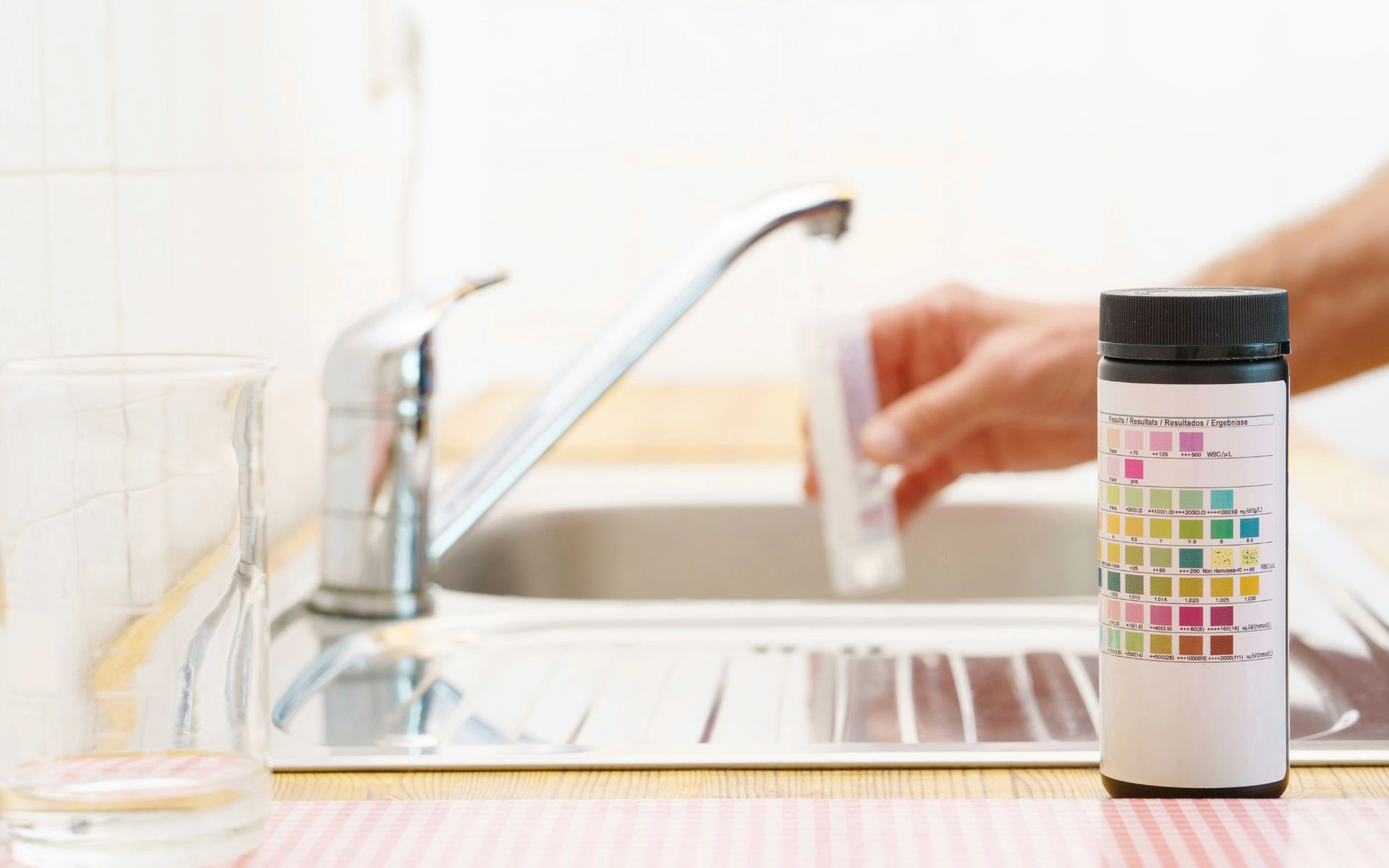
Most free water tests focus on basic, fast indicators that can be measured onsite without laboratory analysis.
Common parameters include:
- Hardness
- Iron presence
- pH levels
- Chlorine (for public water)
- General taste or odor indicators
- Manganese
- Total Coliform Bacteria
- Total Dissolved Solids
- Arsenic
These tests are useful for identifying obvious issues and starting conversations about water treatment. NH Tap offers free water testing in New Hampshire as an initial step to help homeowners understand surface-level concerns.
Free tests are best viewed as a snapshot, not a diagnosis.
What Free Water Tests Don’t Test For
This is where misunderstandings often occur.
Most free tests do not detect:
- PFAS
- Nitrates and nitrites
- Bacteria such as E. coli
- Lead
- Radon
- Uranium or other trace contaminants
These contaminants require certified lab analysis and are especially relevant for private wells and certain public water systems in New Hampshire.
Resources outlining common New Hampshire water issues help explain why these contaminants matter, even when water looks clear and tastes fine.
Common Misconceptions About Free Water Testing
Misconception #1: “If my free test looks good, my water is safe.”
Free tests do not rule out invisible contaminants.
Misconception #2: “Free tests and lab tests are the same.”
They serve different purposes and provide different levels of detail.
Misconception #3: “More testing means something is wrong.”
In reality, testing provides clarity, not alarm.
These misconceptions often lead homeowners to delay lab testing until a problem surfaces during an inspection, health concern, or system failure.
When Lab Water Testing Is Essential
Lab testing becomes essential when:
- Your home is on a private well
- You’re buying or selling a home
- There are changes in taste, odor, or clarity
- Your property is near known contamination sources
- A drought, flood, or plumbing change has occurred
Private well owners should consider routine well water testing in New Hampshire, as there is no automatic monitoring or oversight.
Lab testing identifies contaminants that free tests simply cannot detect.
How to Interpret Limited Results Responsibly
Free test results should be interpreted as directional, not definitive.
A responsible approach looks like this:
- Use free testing to identify surface-level issues
- Review regional water risks and history
- Decide whether lab testing is appropriate
- Use confirmed results to guide treatment decisions
This prevents both overreaction and underreaction.
NH Tap helps homeowners interpret results, explain what’s meaningful, and determine whether additional testing is warranted before recommending treatment.
Why This Matters for Treatment Decisions
Installing treatment based on incomplete data often leads to:
- Over-sized or unnecessary systems
- Missed contaminants
- Ongoing water issues despite “treatment”
Effective treatment always starts with understanding what’s actually in the water, not just what’s easy to measure. That’s why NH Tap designs water filtration systems based on verified test results, not assumptions.
Final Thoughts: Free Testing Is a Starting Point, Not the Finish Line
Free water testing isn’t a gimmick, and it isn’t meaningless. It’s a first step.
But when homeowners rely on free testing alone, they risk missing contaminants that affect health, plumbing, and long-term water reliability.
By understanding the limits of free tests, knowing when lab testing is essential, and interpreting results responsibly, homeowners can make confident decisions without pressure or guesswork.
NH Tap offers both free screening tests and comprehensive lab testing because the right answer depends on the situation — not a one-size-fits-all approach.
Return to Articles