Reverse Osmosis vs Whole House Filtration: Cost, Performance & Use Cases
TL;DR: Reverse osmosis and whole house filtration systems solve different water problems. Reverse osmosis systems focus on highly purified drinking water at a single location, while whole house filtration systems treat water throughout the entire home. The right choice depends on your water quality concerns, budget, maintenance expectations, and household water usage.
Reverse Osmosis or Whole House Filtration?
If you’re comparing reverse osmosis vs whole house filtration, you’re already asking an important question. Many homeowners assume all filtration systems work the same way, but these systems are designed for very different purposes. In New Hampshire, water conditions vary widely depending on whether a home uses public water or a private well. Some homes struggle with PFAS, arsenic, chlorine, or bad taste, while others deal with sediment, staining, hardness, or bacteria throughout the plumbing system.
Understanding the differences between reverse osmosis and whole house filtration helps homeowners choose the right solution instead of overspending on the wrong equipment.
What Is a Reverse Osmosis System?
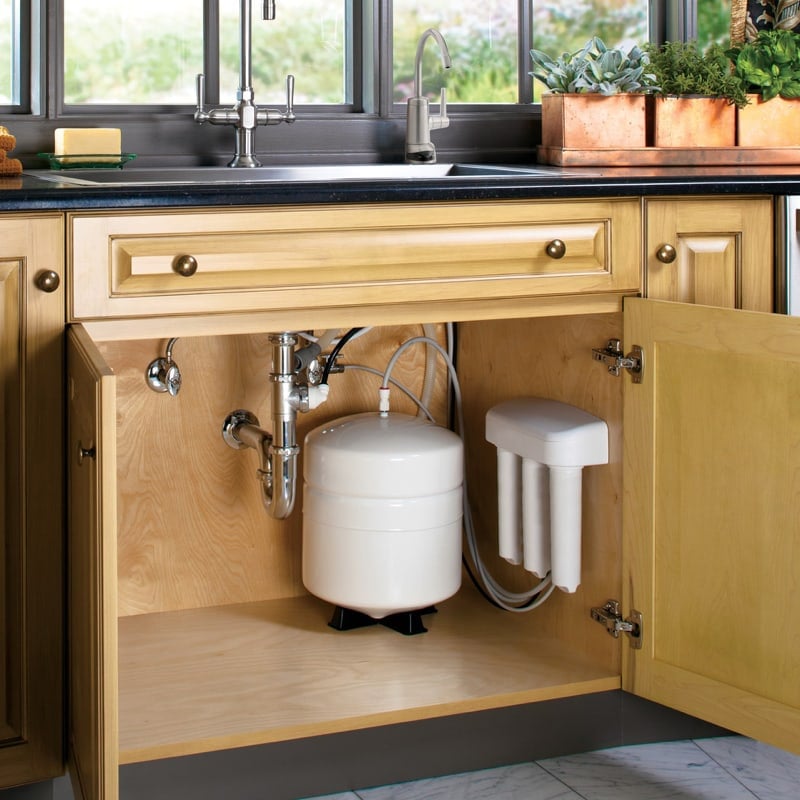
A reverse osmosis system, often called an RO system, is a point-of-use filtration system designed primarily for drinking water.
RO systems force water through a semi-permeable membrane that removes a wide range of contaminants, including:
• PFAS and PFOA
• Arsenic
• Lead
• Nitrates
• Dissolved solids
• Certain chemicals and minerals
Most reverse osmosis systems are installed beneath a kitchen sink and only treat water through a dedicated faucet. Many homeowners choose reverse osmosis systems because they provide highly purified drinking water with improved taste and clarity.
What Is a Whole House Filtration System?
A whole house filtration system treats water as it enters the home, supplying filtered water to every faucet, shower, appliance, and plumbing fixture.
Whole house systems are commonly used to address:
• PFAS and PFOA
• Arsenic
• Sediment
• Chlorine
• Iron
• Odor issues
• Water staining
• General water quality concerns
Unlike reverse osmosis systems, whole house systems focus on protecting the entire plumbing system and improving overall household water quality. These systems are especially common in homes using private wells or dealing with regional groundwater issues. Learn more about whole house water filtration systems.
Reverse Osmosis vs Whole House Filtration Performance
The biggest difference between these systems is what they are designed to accomplish.
Reverse Osmosis Performance
Reverse osmosis systems provide extremely high contaminant removal performance for drinking water.
RO systems excel at removing:
• Dissolved contaminants
• PFAS and PFOA
• Heavy metals
• Salts and minerals
• Drinking water impurities
However, they only treat water at one location unless multiple systems are installed throughout the home. RO systems are often recommended for homeowners concerned about drinking water safety, especially when dealing with PFAS contamination. Many homeowners researching this topic also ask: Does Reverse Osmosis Remove PFAS?
Whole House Filtration Performance
Whole house filtration systems improve water quality throughout the home.
These systems perform well for:
• Shower and bathing water
• Appliance protection
• Sediment reduction
• Taste and odor improvement
• Iron and staining reduction
Whole house systems are generally better suited for improving overall household water quality rather than producing ultra-purified drinking water.
Reverse Osmosis vs Whole House Filtration Cost
Cost differences between these systems are significant because they serve different purposes.
Reverse Osmosis System Costs
Reverse osmosis systems are typically less expensive upfront.
Costs may include:
• System installation
• Annual filter replacement
• Membrane replacement
• Periodic maintenance
Because RO systems only treat one faucet, installation is usually simpler and less expensive than whole-home treatment systems.
Whole House Filtration System Costs
Whole house systems generally involve higher installation costs because they treat all incoming household water.
Costs may vary based on:
• Home size
• Water usage
• Water chemistry
• Type of contaminants
• Additional pretreatment requirements
Homes with iron, sediment, or corrosive groundwater may require additional treatment stages to protect system performance. Many New Hampshire homeowners benefit from professionally designed water filtration systems that match local water conditions.
Which System Requires More Maintenance?
Both systems require maintenance, but their needs differ.
Reverse Osmosis Maintenance
RO systems typically require annual cartridge and membrane replacement. Because they process smaller volumes of water, maintenance is usually manageable and predictable.
Whole House Filtration Maintenance
Whole house systems may require:
• Media replacement
• Sediment filter changes
• Valve servicing
• UV bulb replacement
• Water softener maintenance
Maintenance frequency depends heavily on water conditions in the home. Houses affected by iron, sediment, or hard water often experience higher maintenance demands. Learn more about iron in New Hampshire water.
When Reverse Osmosis Makes More Sense
Reverse osmosis systems are often the better choice when:
• Drinking water quality is the main concern
• PFAS or arsenic contamination is present
• Homeowners want highly purified water
• Bottled water replacement is the goal
• The household already has acceptable whole-home water quality
RO systems are commonly paired with existing whole-house systems rather than replacing them entirely.
When Whole House Filtration Makes More Sense
Whole house systems are usually the better option when:
• Water problems affect the entire home
• Staining or odor issues exist
• Sediment or chlorine affects appliances
• Shower and bathing water quality matters
• Multiple fixtures are affected by poor water quality
Homes dealing with broad water quality concerns often require treatment at the point where water enters the home.
Can You Use Both Systems Together?
Yes, and many New Hampshire homeowners do.
A common setup includes:
• A whole house filtration system for overall water treatment
• A reverse osmosis system for purified drinking water
This combination allows homeowners to protect plumbing and appliances while also improving drinking water quality at the kitchen sink. Combined systems are especially common in homes with private wells or multiple water quality concerns. Homeowners comparing water sources may also benefit from reading about private well vs public water in New Hampshire.
The Right System Depends on the Problem
Reverse osmosis vs whole house filtration is not about which system is “better.” It’s about choosing the right solution for the specific water problems in your home. Reverse osmosis systems specialize in high-purity drinking water, while whole house systems improve water quality throughout the home. In many New Hampshire homes, the best solution involves combining both approaches.
NH Tap helps homeowners evaluate water quality concerns, compare treatment options, and design systems based on actual water conditions, household needs, and long-term maintenance expectations.
Return to Articles